
A few weeks ago I was talking with a manufacturer that’s been building equipment for more than 100 years.
Its most underused asset is an engineer who’s been with them for 49 years. Oh, and they mentioned off-hand that a machine they built 50 years ago is still running in the field.
But if you look at their website, you won’t find any of it. Not the engineer’s name. Not the longevity of their machines. Not their history as a company.
Most manufacturers I talk to have their own version of this story.
Think about what you’ve already got sitting around:
- The sales calls your reps have with buyers every month, where buyers tell you exactly what they’re worried about
- Product spec sheets and old proposals in a OneDrive folder somewhere
- Manuals, white papers and technical guides
- Decades of experience on your sales, product and service teams
Now think about how much of that a buyer vetting you on your website would actually find.
You’re not alone if you just shifted in your seat a little.
Here’s why it matters more than it used to
Buyers do most of their homework before they ever call you. That was true five years ago. What’s changed is where they do it — it’s no longer just Google and their peer network.
69 percent of technical buyers now use generative AI somewhere in their buying process.
When one of them asks ChatGPT who makes the best version of what you sell, ChatGPT answers from whatever it can find and read. If your expertise lives in a 49-year veteran’s head and a PDF nobody’s opened since 2016, you’re not in that answer. Somebody else is.
(I wrote more about how the buying process has changed, and what to do about it, here.)
Most manufacturers I speak with have this same problem:
- Deep subject matter knowledge exists.
- But it isn’t visible.
- And you don’t have the people or the hours to dig it all out and publish it.
We spent this year building a system to fix it.
Let me introduce your Company Brain
Your Company Brain is an AI-friendly database of everything that makes it obvious your company is the right choice, all in one place:
- Your sales call recordings and notes
- Interviews with your engineers
- Past proposals and quotes
- Spec sheets, manuals and white papers
- Brand guidelines and goals
- Company strategy and priorities
We gather what you’ve already created. Then we look for the gaps:
- Does your positioning say when a buyer would be foolish not to choose you?
- Do we really understand what triggers your buyers to buy, and where you win and lose in their eyes?
- Where would 20 minutes with your top engineer turn a decent article into the most helpful piece on the internet on that topic?
The first version of your Company Brain comes together in the first month or two of working together, with a few known gaps. And then we close those gaps one workshop, interview and project at a time.
Our team has spent thousands of hours with manufacturers selling to buyers like yours. That shapes the questions we ask your engineers, customers and sales team. It also helps us catch what’s missing and say when an idea isn’t worth pursuing (because we’ve tried it before).
Then we put your brain to work. Every job it does runs through a skill. A skill is a repeatable AI workflow that does one thing well, built and refined by a marketer who’s done that job by hand for years. A human strategist reviews the output before you ever see it. When your team makes a correction, it gets logged in your voice and preferences file, and every skill reads that file before it writes. So the interview we do for one article feeds the next one, and your edits stick.
What you have
- Sales call recordings and notes
- Interviews with your engineers
- Past proposals and quotes
- Spec sheets, manuals, white papers
- Brand guidelines and goals
- Company strategy and priorities
Your Company Brain
We distill your context, package it the right way and keep it current
- Your engineers’ answers
- Your buyers’ questions
- How your company talks
- Your growth goals
AI skills built by marketing experts
What it helps us do
- Sales proposalsFirst drafts after each call
- Technical articlesBuilt from engineer interviews
- Showing up in ChatGPTRanked buyer questions to answer
- Make better decisionsDeeper buyer insight behind every priority
- Anything else marketing or sales needsEmails, content and more
“OK, just show me what it does already”
Fair.
Below are six marketing projects we’ve run through the system this year. The first is our own work on our own website, with real numbers. The second draws on several real client audits. The other four come from real client work with the names, numbers and details changed.
Example 1 · Our own website · Real
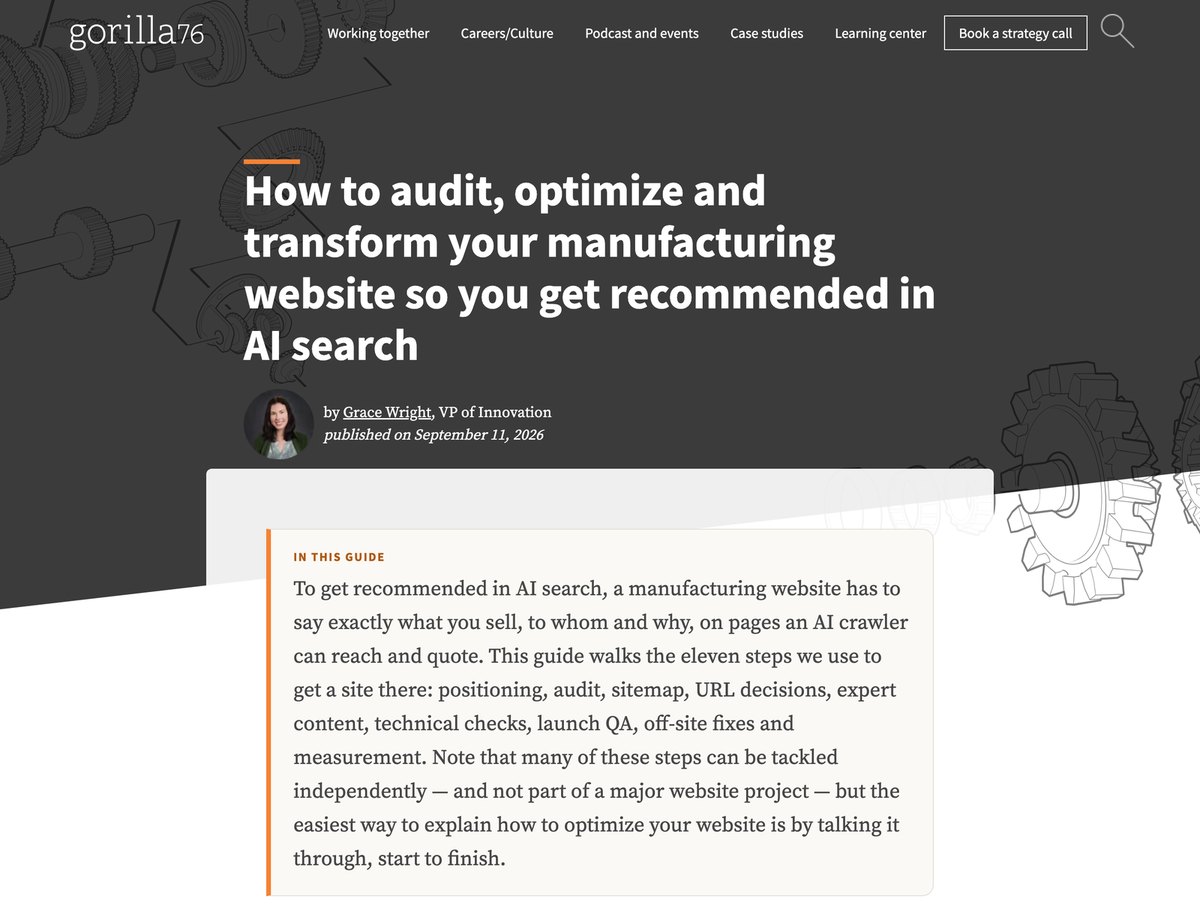
Our own Company Brain shaped the AI search guide we published on gorilla76.com.
What went in
Our brand and voice rules, our point of view on AI search, findings from 11 manufacturer website audits, buyers’ own words from our sales calls and our expert’s written answers to the questions the research couldn’t settle.
What came out
A published guide, built to answer a how-to question AI wasn’t naming us for. AI cited it eight times in its first four days live. The same skills rebuilt two older posts. Google impressions nearly doubled on one (9,122 to 17,623) and rose six times on the other (2,062 to 12,420). Read the guide →
Where our team stepped in
Our vice president of innovation answered the expert questions, then edited five rounds of drafts over a week before it went live.
← Back
Example 1 of 6
Example 2 · Several manufacturers · Findings from real audits, anonymized
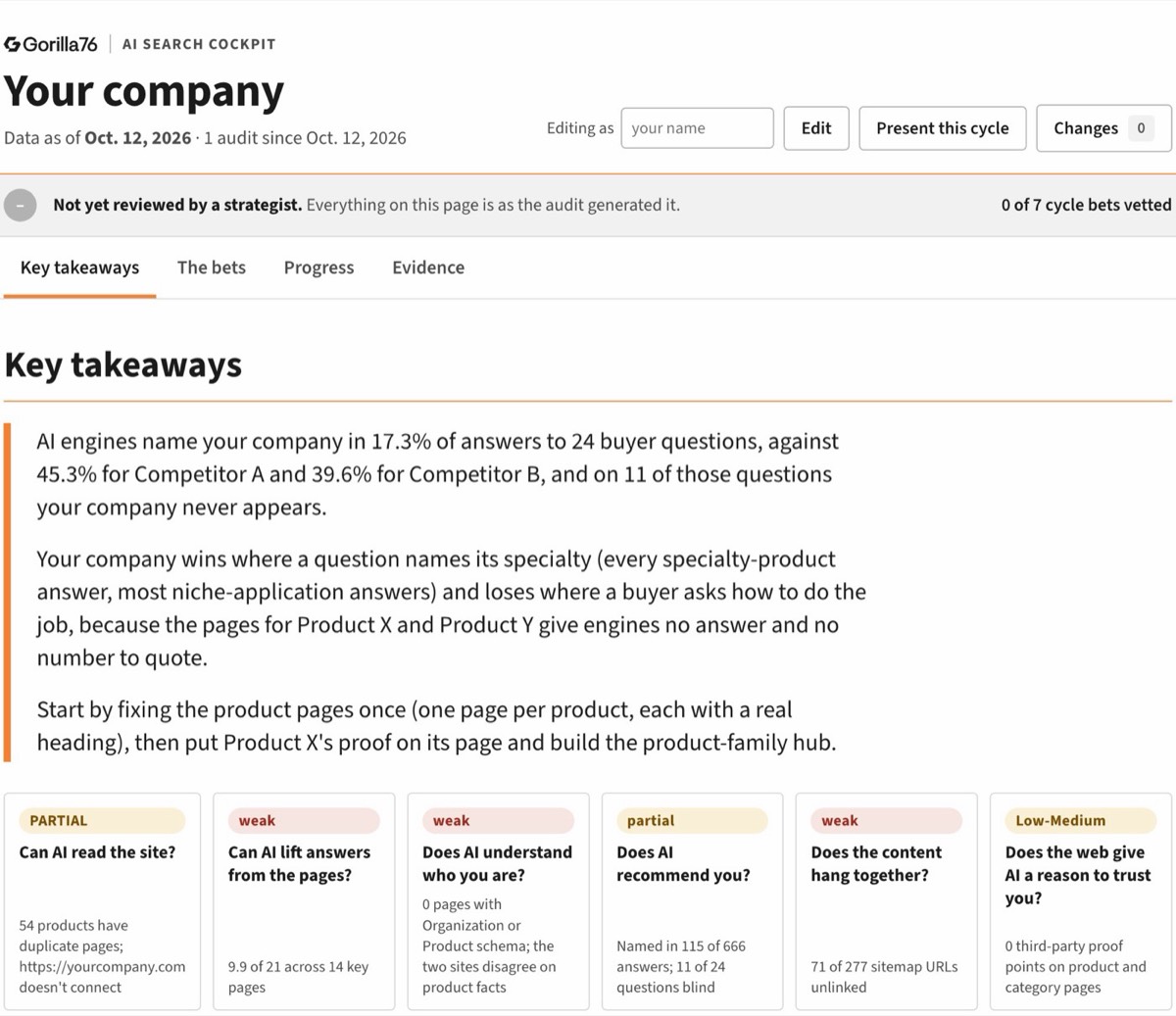
Top AI search priorities, in the context of your company’s strategy.
What went in
A full crawl of the website, buyers’ questions run across ChatGPT, Gemini and Google, your Search Console and GA4 data and what we’ve learned auditing 35-plus industrial websites.
What came out
One prioritized action plan that says what to fix and in what order. Research that would’ve taken weeks the old way runs in about 70 minutes.
Where our team stepped in
A strategist reviews every recommendation and signs off before you act on it. The dashboard says plainly what’s been vetted and what hasn’t. The audit and dashboard are their own system, fed by the brain, and our AI search page walks through the whole thing.
Example 2 of 6
Example 6 · Two equipment manufacturers · Illustrative recreation
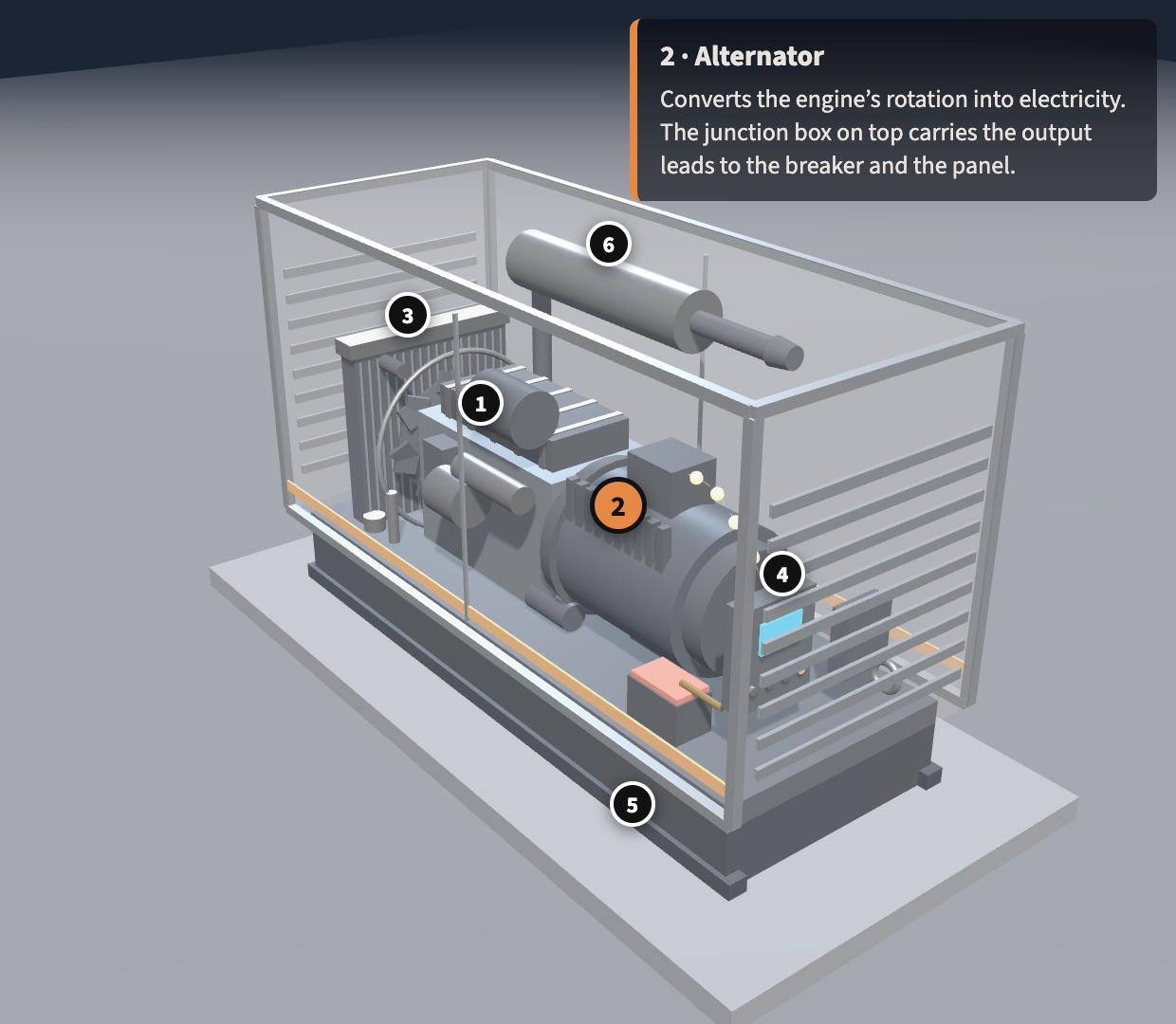
Interactive 3D models of your product, with the differentiators buyers care about called out.
What went in
Product photos from their websites, how each machine works from years on the account and the features buyers need to see.
What came out
3D models buyers can orbit, zoom and watch work. We built them in code from photos and account knowledge, with no animation studio involved. A few years ago, a detailed animation of the machine was out of budget for one of these clients.
Where our team stepped in
Our account lead asked, “What can we show about this product today that we couldn’t before?” and then built it.
Still image. The real model is interactive.
Example 6 of 6
Make sense to have a conversation?
If you read this and thought, “We’ve got 30 years of that knowledge sitting in people’s heads,” let’s talk about getting it out. I’d like to hear where that knowledge lives today, and then we can talk through how we’d extract it, compile it and organize it into a Company Brain that fuels a powerful marketing system for your company.


