Before I became a copywriter for a web-marketing agency, I once ran social media for a great B2B company. As a recent college grad, I was tasked with creating and executing a social media strategy. At that point, I had some ideas I knew could work, but executing is more than just having ideas. As this was a smaller company with almost no existing social media presence, I had more social media knowledge than anyone else in the company, even as a recent grad. I was the social media presence.
That may sound great, until you realize that when you’re the social media presence, you need to educate everyone else about social media, earn buy-in for everything, and prove value at every turn. That’s a tall task, especially if you’re learning social media yourself. And let’s face it, social changes every day, so even the most expert social media professionals learn every day. Truthfully, social media may not make sense for some companies. Investing too much time into social is a pitfall in itself, and while social media can yield real results for most companies, we don’t recommend that every single company out there set up a Twitter account.
With that situation in mind, we’ve put these tips here for you. This post will help you prove value and earn buy-in, make a plan that’s simple and executable, and get up to speed on social media. This is the article I wish I had read when I was my company’s social media presence.
The unlucky 13 social media pitfalls
Here’s what not to do in B2B social media. The common theme here is define success the right way so you can prove value and earn respect. Stay focused on your company’s bottom line and don’t slow yourself down with unnecessary distractions.
1. Don’t assume you know what you’re doing.
Just having your own Facebook and LinkedIn accounts for years doesn’t make you an expert in social media marketing for B2B companies. And even if you are an expert, stay humble and read — a lot. Instead of leaning solely on your own knowledge, be a sponge and constantly soak up all the relevant information you can. We’ve reviewed a number of books that would make great additions to your reading list, and we’ve created a number of guides in our resources section that we think you’ll find useful. We also recommend blogs such as Marketing Profs, Hubspot and Social Media B2B.
2. Don’t hang yourself on social media.
Unless you’ve been brought in specifically to handle social media and only social media, you’ve got bigger fish to fry. You’ll be effective at generating leads and make yourself valuable to your company by posting great content on your company blog and concentrating on excellent email marketing. Don’t focus all of your energy on Facebook Statuses, Tweets or even LinkedIn Posts. Spend far, far more of your time on blogging and email marketing.
3. Don’t ask for a social media budget till you prove value.
Odds are, if you’re reading this post, you either have a limited or nonexistent social media budget. If your boss is already paying you to do it, he probably thinks you are his budget. Prove your value and the value of web marketing before you ask for a social media marketing budget. I know, I know. Really succeeding on social can require a budget, but you can get results without one. This isn’t the first place to spend, and it’s not the first place where you should try to persuade your boss to spend.
4. Don’t send your bosses a super lengthy strategy document.
They have limited time. When you have a plan, make them a short presentation — in PowerPoint or Keynote; they probably don’t use Prezi. Yes, in your research, you may find it useful to write a long document for yourself, but you probably get less access to the decision makers than their mailman gets. I made the mistake of passing on a social media research report, and it slowed down the process considerably. Instead, make your managers an easy-to-absorb presentation and make your information straightforward and instantly understandable.
5. Don’t waste days or weeks making the perfect social media policy.
Yes, it’s possible that your boss will want you to make one because other people may use social media in the company’s name. Yes, it’s important to have guidelines, especially if you work in a regulated industry. But if you follow this 8-word social media policy, you’ll be on the right track. If you truly need to show your managers a lengthy document, tweak some existing ones.
6. Don’t come off like a cheerleader for social media.
As a marketer at a B2B company, your main goal is to increase sales through your marketing efforts. One sale or large purchase order will likely more than cover any time or material costs you incur on social media or web marketing. You want to prove value by providing leads to the sales guys in your company and helping them out. You don’t want to alienate them by putting yourself at odds with them.
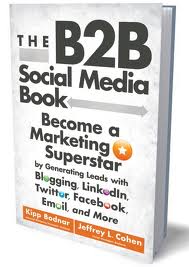
Unfortunately, a lot of inside sales guys and corporate executives perceive social media marketers as cheerleaders for Twitter and Facebook. They think you play around online looking at pictures of puppies. While I love puppies as much as the next guy — how could anyone not? — that’s not what I do! I help Gorilla and Gorilla’s clients reach people who become contacts, customers and clients. As Kipp Bodnar and Jeffrey Cohen, authors of The Social Media B2B Book put it, your blood should be boiling when people regard you as a mere cheerleader for Facebook. We don’t blab away about how cool we are for working on social media; we get stuff done.
7. Don’t try to use every social media network.
When you physically embody your company’s social media presence, and you have to prove value to earn buy-in from decision makers, you need results — now. It’s a lot easier to succeed if you focus on one or two social networks than it is to succeed on seven different platforms at the same time. Pick only the ones that are relevant to your business. LinkedIn generates more B2B leads than all of the other social networks combined. Engagement on Google Plus correlates directly to your website’s search rankings. Facebook, Twitter, YouTube, Pinterest, Instagram, Slideshare, and Vine can probably take a back seat, at least for now.
8. Don’t let a total lack of content stop you.
Content from your blog gives you that all-important stepping stone to your website, where you will capture email addresses. It’s true, email marketing pays off your social media marketing, web marketing and blogging. But, amazingly, you can grow your reach and build relevant social media contacts by sharing other people’s content. You can increase reach even if you have an utter, total and complete lack of content, and your company has a highly bureaucratic process for publishing anything on your company website.
Yes, if you can Post and Tweet your own great content, you can bring people back to your site and capture email addresses, and that’s where we recommend you start. But even if you have great content, you still want to follow the 10-4-1 rule on Twitter: 10 shares of other people’s relevant content per four shares of your content and one share of your landing pages. Social media is all about making the most of your resources, so make the most of the vast ocean that is the Internet. Share other people’s content when you don’t have your own to share. Just make sure that content is relevant to your audience, and if you can actually build a relationship with other content creators, they may share your great content when you post it.
9. Don’t brag to your bosses in jargon.
You’re wasting your time if you make reports about Klout scores, Favorites, Likes, RePins and ReTweets. Yes, these are all important measures of influence and engagement, but your bosses probably care more about leads. To generate leads and sales, you have to reach a specific, targeted audience of your prospective clients and customers. Show your managers how you reach potential clients or customers and reach people who spread your message or refer you to clients or customers. Don’t speak a foreign language to them about ReTweets, RePins, Shares, Likes and Mentions.
10. Don’t get legal involved.
This is more of a concern that your boss is likely to have, but don’t bog down your social media posts by involving lawyers. Some traditional companies new to social media will actually have their legal departments review every single social media post. Lawyers charge expensive rates, they don’t care about your social media success and most of them know next to nothing about social media marketing.
If your managers tell you they want lawyers to review your social media posts, or even blog posts, make sure they know lawyers will make your efforts ineffective and far more expensive. If you face this obstacle, try presenting a solid social media policy to assuage their concerns.
11. Don’t create multiple accounts on one social media platform.
You’ll have a tough enough time building up one social media account, so don’t render yourself ineffective by diluting your efforts. Instead of making a separate Facebook Page for your various products and services, build up one Company Facebook Page that features all of them. The same goes for Twitter, LinkedIn and all the other networks.
Unless you’re at a huge company with a massively diverse product and service offering, think GE for instance, you’re not going to crank out so much content that it makes sense to have multiple branded Twitter accounts. You have limited content. Unify it all behind one account to give it more power.
12. Don’t design custom covers unless you’re a designer.
I realize Facebook, LinkedIn, Google Plus and Twitter all allow you to add awesome, custom designed photos and art for truly kick-ass business pages. But, if you’re not a designer, it’s a massive time suck with little reward. To start out, you probably have yourself, no budget, and most likely, limited graphic design skills. Pick company photos, crop them to the right size using Cut My Pic, and upload them to your company pages. Keep your pages all unpublished, and ask for one, single review to get them live.
13. Don’t just ReTweet, don’t just sell and don’t post about every topic on earth.
This bullet briefly covers what to post about, and you’ve heard a lot of this before, so we’ll keep it as simple as possible (our form of ASAP). If you use Twitter, just pressing that ReTweet button is lazy! You share no opinions, no insights and none of yourself. It is highly important to ReTweet others, but do it the right way. The same idea applies to posting links on LinkedIn, Facebook and Google Plus. You want to share some form of valuable analysis. You’re not at a news organization that shares purely news updates; you’re at a company whose social media value lies in its expertise.
Share that expertise in a way that genuinely helps and interests your target audience. Social media is all about a two-way conversation where you connect with real people. Don’t make every post about selling something; instead share your opinions and analysis on issues, news and trends that relate to your industry. Share how-to information that helps people in your target audience do their jobs. Your Twitter account and other social media accounts should sound like a real person, not an academic white paper.
Blah blah blah. Lots of articles out there will help you establish your brand voice on social media, and you can read a lot of this stuff on Facebook’s Get Started page. Last but not least, don’t post about every topic under the sun. Find out what information your audience wants and give it to them, that way you stay focused and get results.
Web marketing that works.
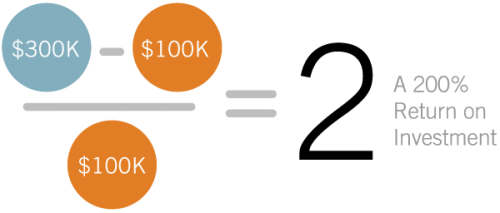
Want to get real results through web marketing? You’ve seen our leads-first philosophy in our recommendations. Now, see how we measure success. Click below to download our guide on measuring online marketing ROI.













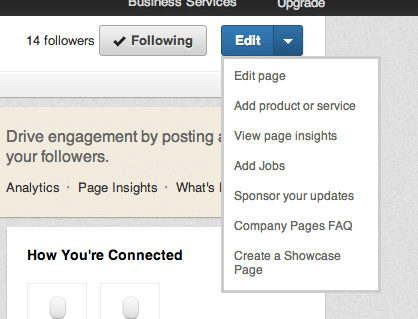
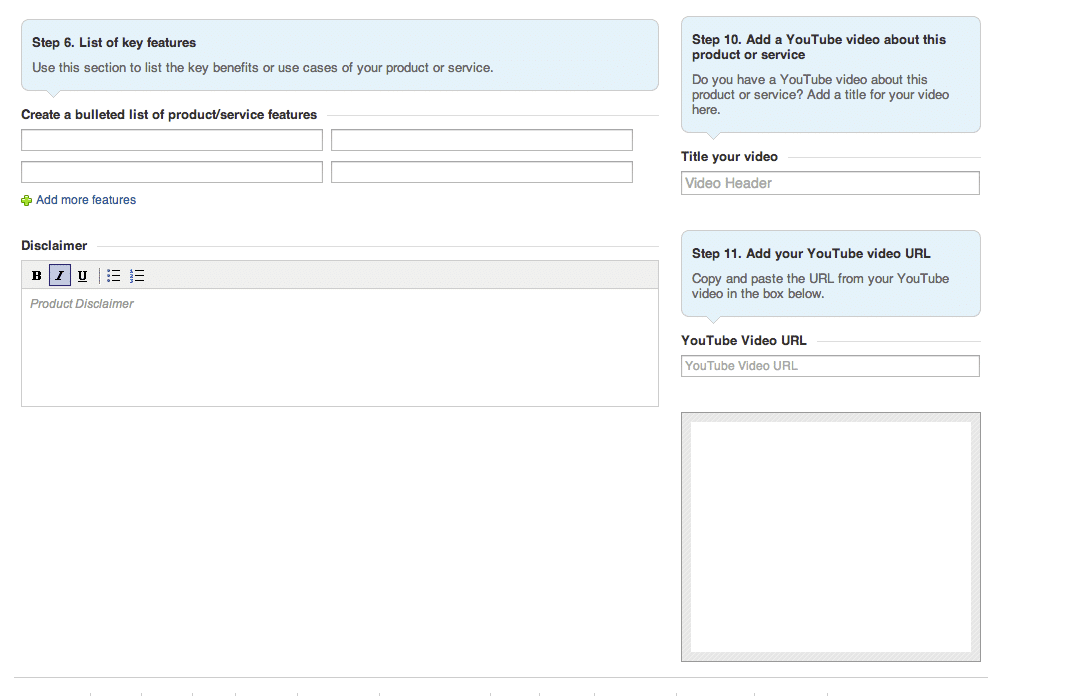
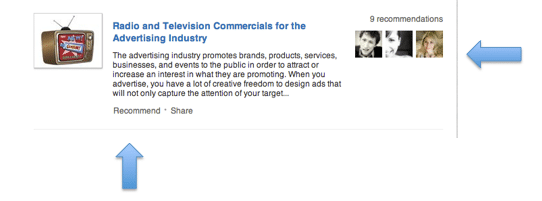
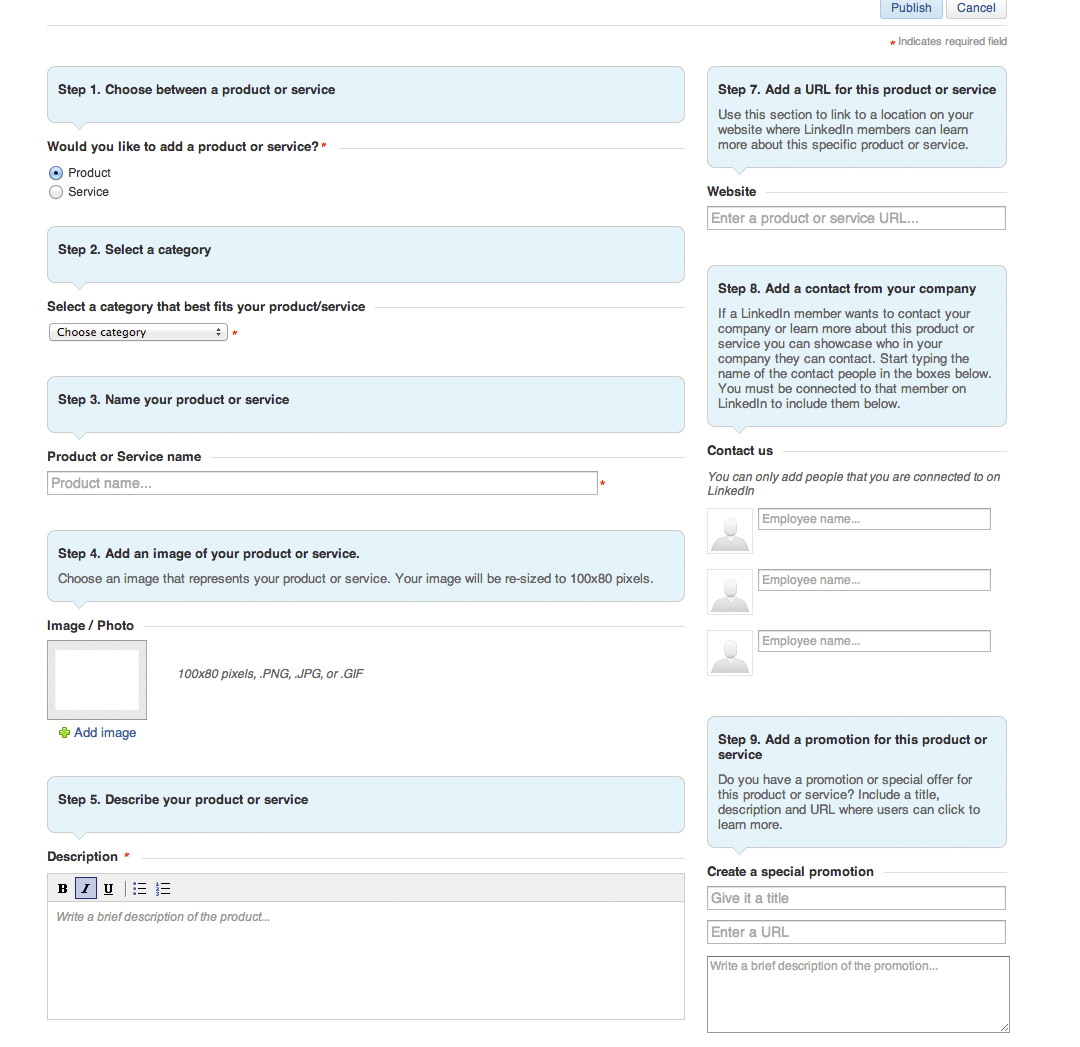 Hit the biggest sales points for your product or service in the description and use bullet points to highlight the value-added benefits of that service. You’ll have a limit of 45 characters in the bullet list section, so be concise and get the best bang for your bullet.
 The profile pic is 100×80 pixels. You can use a resized company logo, but an image specific to the service is more visually appealing. Just make sure the image gives the reader the right visual impression and doesn’t look terribly stretched.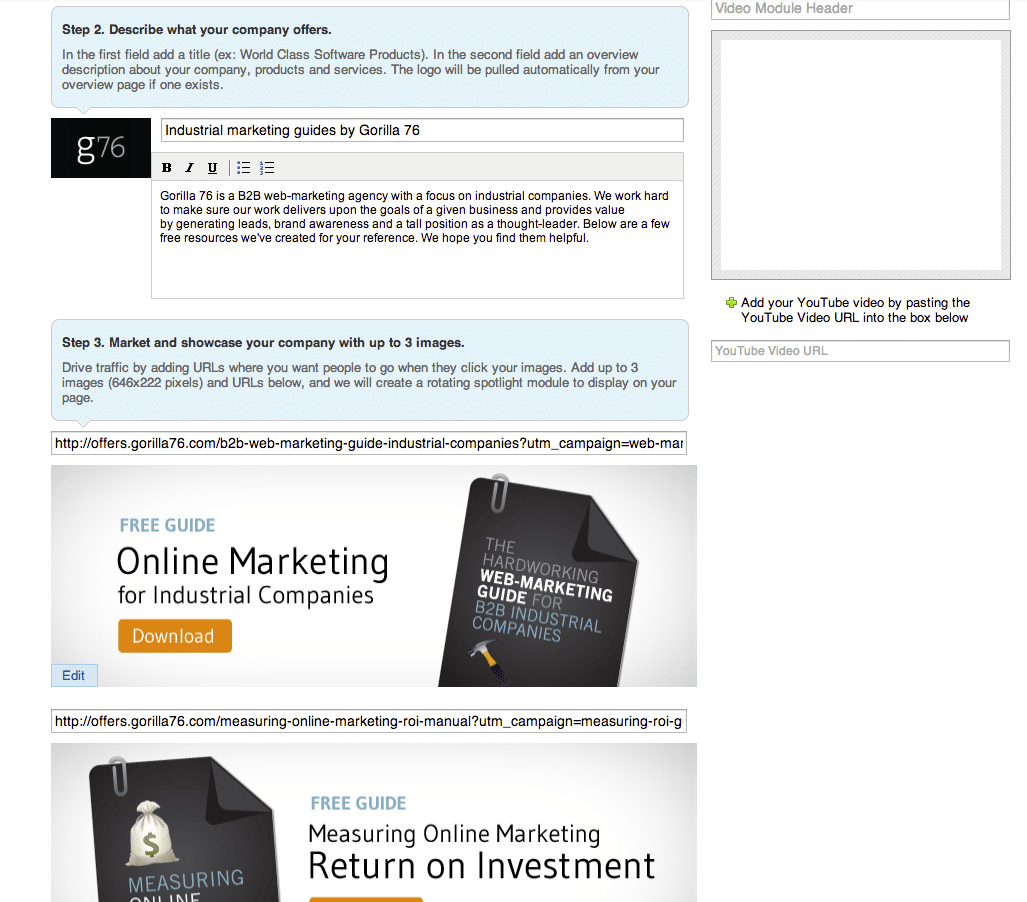







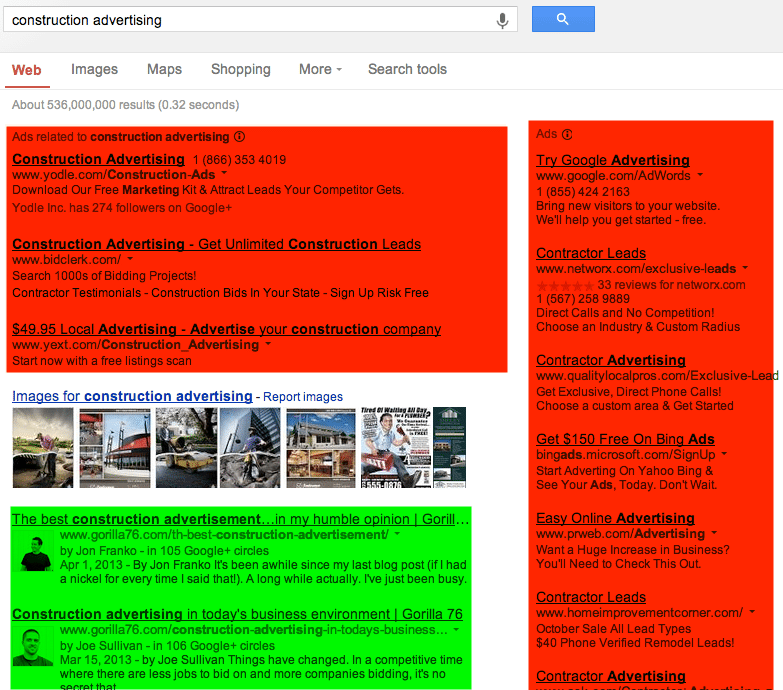
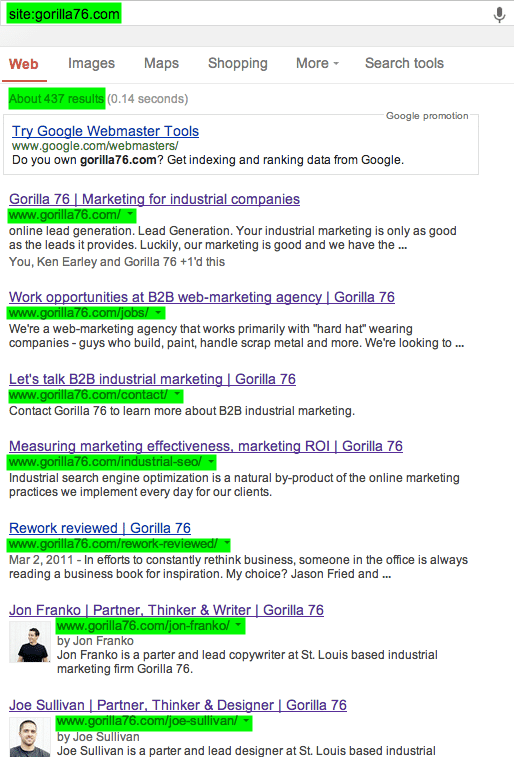















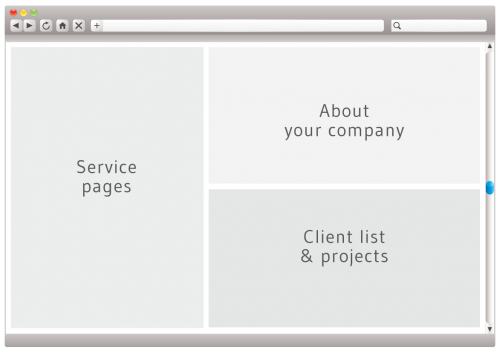
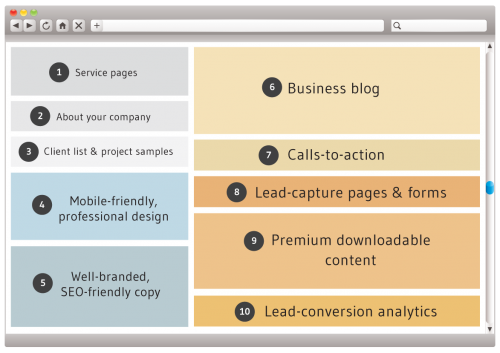
 Search Google for “cheap website design” and you’ll find thousands of companies who can build a $5K website that explains your company’s services, lists your clients and projects, and talks about your history and philosophy. Don’t get us wrong – all of this stuff is very important. In fact, they’re all required in our opinion. But don’t let yourself be fooled either. Simply putting this information online will not win you new business.
 While thousands of web design companies can deliver the above, the pool begins shrinking quickly when great design and writing come into play. A website build is NOT a task for the IT department. It’s a marketing task, and should be executed by marketing professionals with skill sets ranging from marketing strategy to design, copywriting and programming.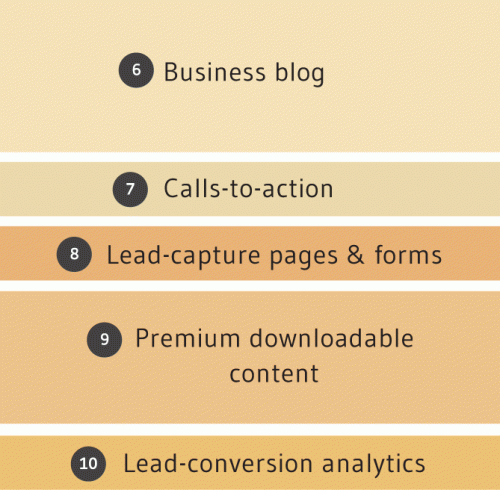

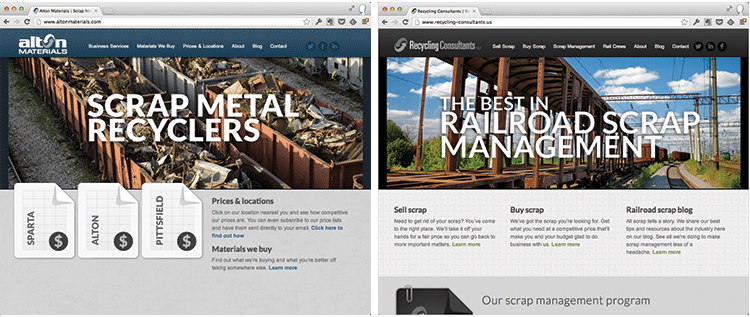
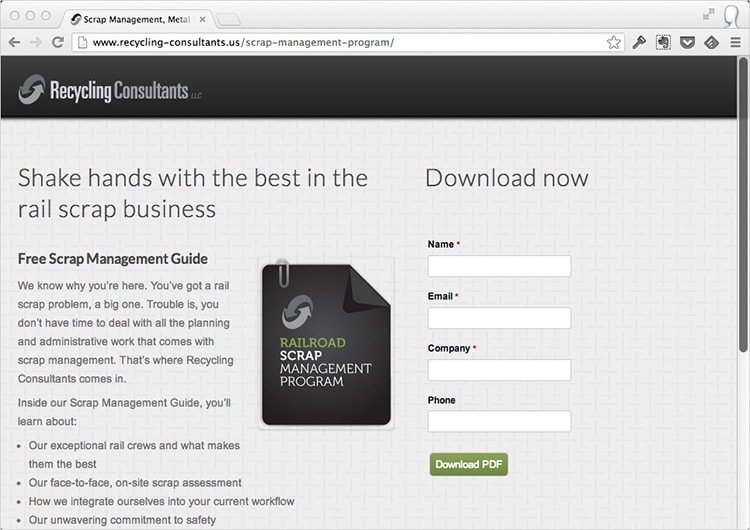
 On the lead-generation front for AM, we built in an email subscribe option for a company newsletter and another for pricing sheet updates, as metal market prices fluctuate frequently. We also developed a Scrap Management Program guide for both companies. These downloadable PDFs serve as buyers’ guides, outlining how AM and RC conduct their business services. The guides were designed to gather contact information from further-down-the-sales-funnel prospects who were willing to trade their email address for the guide.






















 Educational
 Useful











 Focus on specific calls-to-action


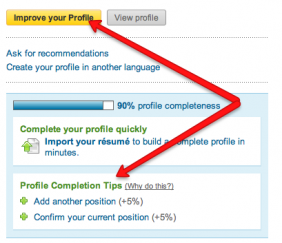 Write a thorough personal profile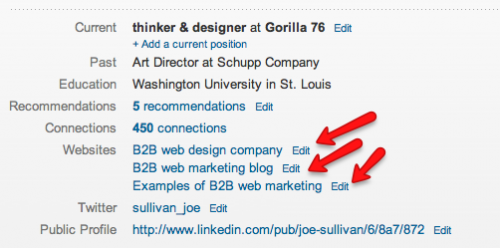
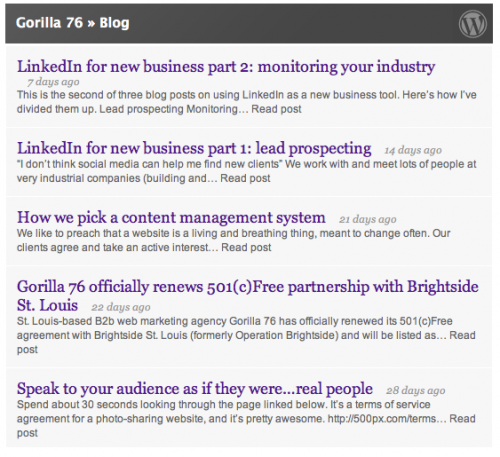
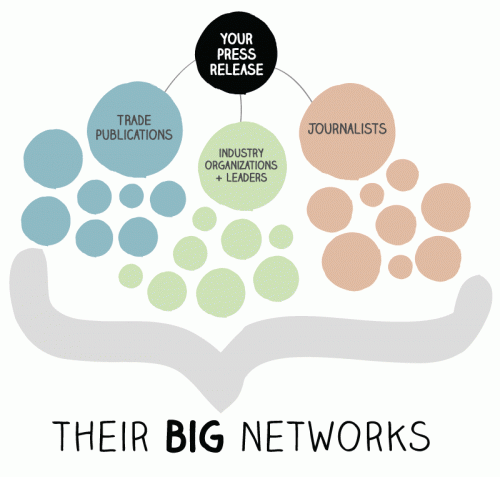
 channels in general. There is now so much information in the public space.
 For many of these guys, business gets done the old fashioned way. Leads come from lists clipped out of trade journals. Prospecting happens via sales calls, handshakes, trade shows or maybe a round of golf. Follow ups take the form of phone calls, emails and shiny direct mailers.
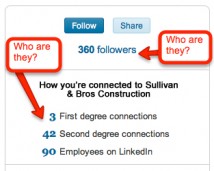
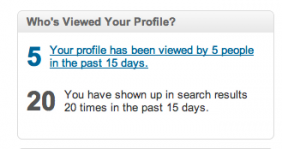 In the right column, you’ll see the “Who’s Viewed Your Profile?” box. With a basic LinkedIn account you can see who’s taken a look the past couple of weeks. And if you choose to upgrade to a

 A landing page is not your home page
 Identify the topic
 State your benefits
 Keep the visitor focused
 Call to action


 The problem at hand

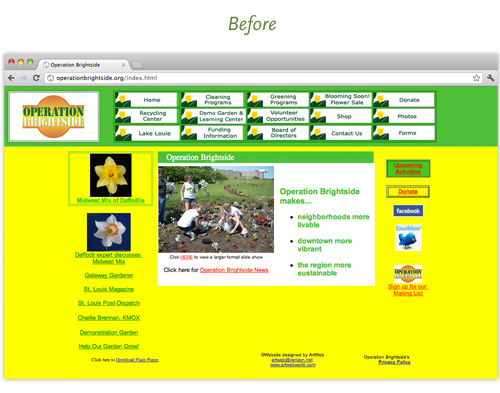
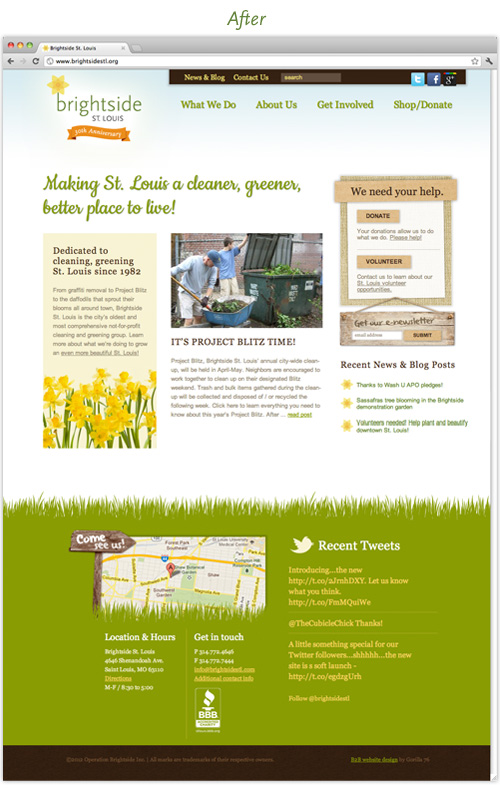
 to include a blog that would focus not only on event recaps, but also on educating the community on how they can make a difference in keeping St. Louis clean and beautiful, while providing resources to help do just that.
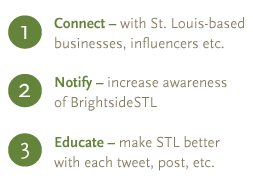 Social media strategy

 But if you’re a business owner and you haven’t dabbled in it yet, it’s certainly worth seeing what all the hype is about. Pintrest is essentially a web-based bulletin board for posting photos and commenting others’ photos. It’s probably most beneficial to businesses who sell something visual – like food, or shiny objects. But if you’re in the B2B marketing world and willing to be creative, there are certainly possibilities. I’m just diving in myself.


 So it’s ugly out there right now. No one is buying. Leads aren’t converting. Business has been better. I’m no economist, but if the past is any indication of the future, people will start buying again.
 The quantity of raw data available to marketers today can be totally overwhelming if you don’t know how to parse through it. The first third of my presentation focused on how to distinguish between what can be measured and what should be measured. The key is in understanding how to filter through it all, make sense of what bits matter and infuse your learnings into adjustments to your web marketing strategy.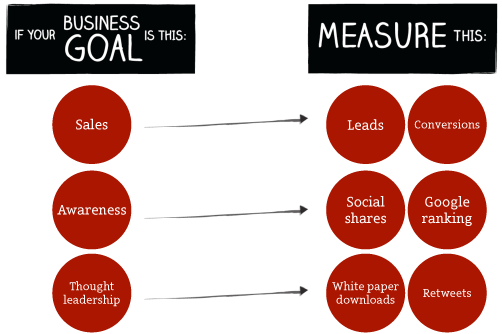
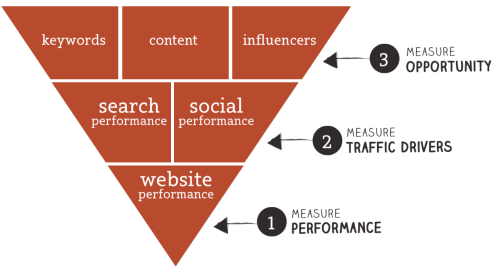
 All these learnings go to waste unless you do something with them. I concluded the day by emphasizing that you must make use of the data you’ve collected by generating reports for yourself, your boss, your business partners or whoever would benefit from seeing it. Then figure out how it can be used to make your marketing strategy more effective.
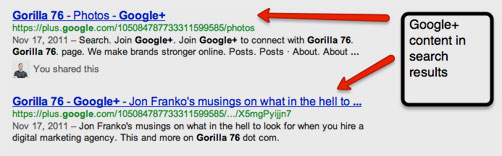
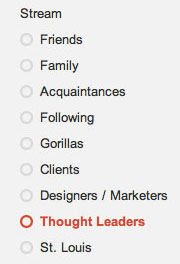 The interface is strongly focused around the ability to segment both your audience and who you’re listening to. When you post something, you can choose who sees it by organizing your connections into “Circles”. What you share with one prospective client base might be different from what you share with another. What you share with your family or friends might be different than what you share with any prospective client base.




 David Meerman Scott
 You know how you have those out-of-town friends who you talk to about once every six or twelve months, and when you see their name pop up on your ringing cell phone you go, “Oh man, I can’t take this right now”? It’s not because you don’t want to talk with them – in fact they might be one of your best friends and you feel a little bit guilty for not answering. It’s because you know it’s gonna be an hour-long conversation to really catch up. And you don’t have an hour right now. Too much of a commitment, right?
 Loading, Please Wait

